|
| Highlights
of Trinity's More Than 200 Years
|
- The
current location of Trinity is the site
originally donated by Colonel Ninian Beall for a Presbyterian church
before 1690. Beall was an indentured servant from Scotland
who
rose to become a member of the Maryland House of Burgess and was also
influential in the settling of the District of Columbia.
- The
Revolutionary War gravesite of Private
John Moore who died in 1793 is located in Trinity's churchyard.
- In
1810, the site of the wooden
Presbyterian meeting house was taken over by the Trinity Protestant
Episcopal Church in Upper Marlborough. David Crauford III
deeded
the property to Trinity. A vestry was elected and Dr. William
Beanes was the first senior warden.
- On
July 16, 1812 Bishop Thomas john
Claggett officially consecrated Trinity Church. Claggett was
the
first American Episcopal Bishop consecrated on American soil.
He
was the first Chaplain of the U.S. Senate in 1800 in the new capital.
- In
1814 British troops were billeted in
Trinity Church on their way to burning Washington, D.C. during the War
of 1812. They stabbled their horses in the old frame structure and
kneaded bread on the tombstones in the churchyard.
- In
September 1814, Dr. Beanes (Trinity's
senior warden) placed some rowdy British troops in the local jail.
British General Ross had Dr. Beanes arrested and put aboard a
ship. They wanted to try Dr. Beanes for treason.
Francis
Scott Key, a young Georgetown lawyer, was appointed by President James
Madison to Negotiate for Dr. Beanes' release. While on a
board a
neutral ship, the massive British bombardment of Baltimore's Fort
McHenry began on September 13th. Following the 25 hours of
attack, Key saw the huge impressive U. S. flag through the smoke and
was inspired to write the poem that became the national anthem, "The
Star-Spangled Banner."
- On
December 31, 1846 the present brick
church was consecrated.
- In
1885 the present Trinity Cemetery on
Rectory Lane was established.
- In
1886 on the 50th anniversary to the
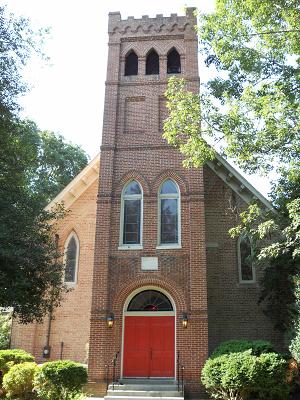
consecration of Trinity, the bell tower was added to the front of the
church and the church was renovated.
- The Rev W. Curtis Draper Jr. was the
longest serving rector of Trinity Church -- 28 years from 1947 - 1975.
- Trinity
parish purchased and restored a
1909 Tracker pipe organ in 1980.
- A
massive restoration effort was completed
in 1987. On January 1, 1987 the Rt. Rev. John T. Walker,
(first
black Bishop of the Washington Diocese) rededicated Trinity Church.
- On
July 1, 2000, the Rev. Martha J. Bonwitt
became the first female Rector of Trinity Church.
- Trinity
celebrated it's Bicentennial in
2010. The play "Trinity Episcopal Church and the Dawning of
the
National Anthem" (by Tricia Politte) was performed.
- Trinity
Church currently hosts the Marlboro
Area Churches Food Bank, which serves an average of 115 households
monthly.
|
 |
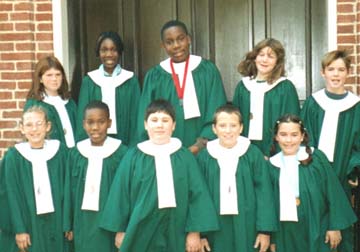 Recognise
these Young Adults? 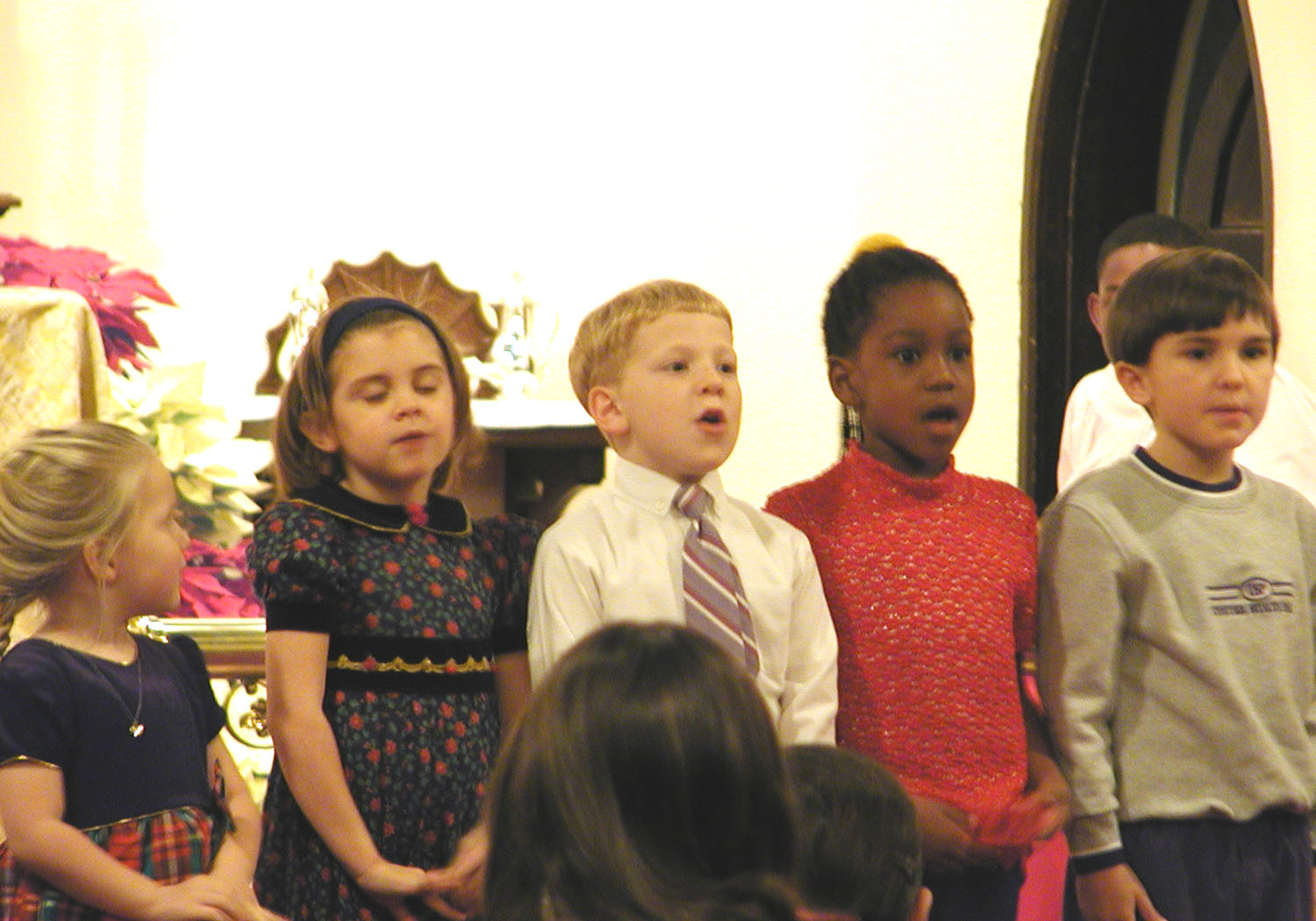 Recognise
these Teens? Recognise
these Teens?
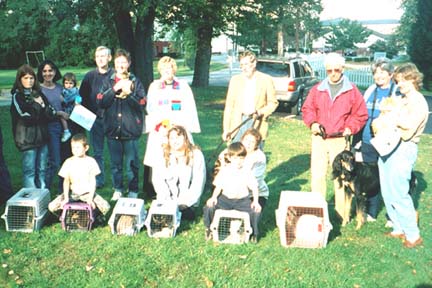 Blessing
the animals -- remember these pets? Blessing
the animals -- remember these pets?
|